
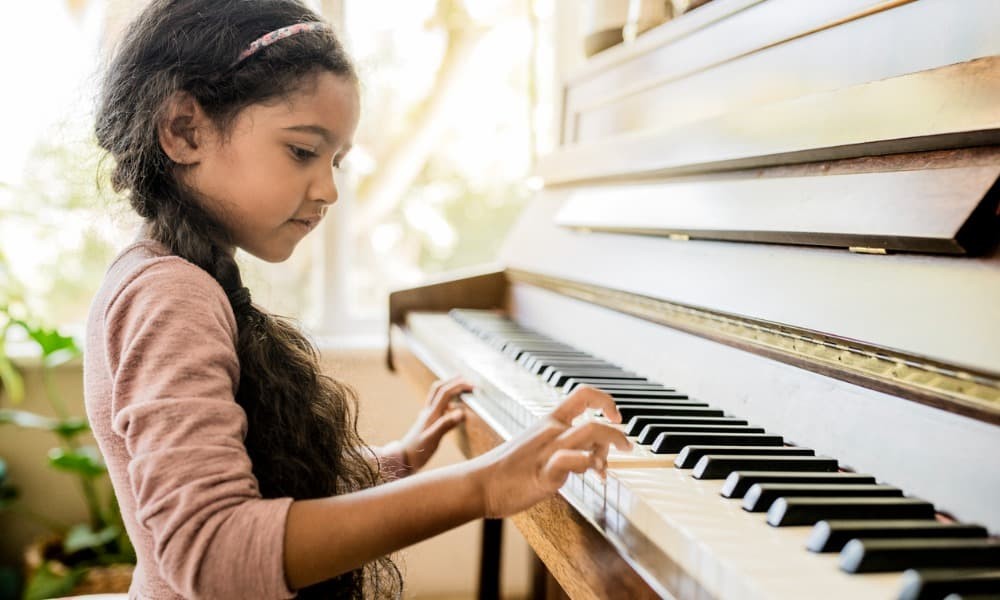

Piano lessons Singapore teachers offer have changed significantly over the past decade. The rigid methods of rote practice and technique-first instruction have given way to a more adaptable approach that meets students at their level, whether they are a five-year-old at a keyboard for the first time or an adult picking up the instrument after years away. The instrument remains the same; the routes into it have multiplied.
Why the Piano Is Where Many Begin
The piano makes music visible. Notes correspond to physical keys arranged from low to high, and the relationship between what you press and what you hear is direct. This visual and physical logic makes it easier for young children to grasp pitch and rhythm in a concrete way before those concepts become abstract music theory.
For older beginners, the piano offers a complete musical education in one instrument. You learn melody, harmony and rhythm simultaneously, often reading two staves at once. That complexity is also why many musicians who play other instruments return to the piano as a tool for understanding music more fully.
Learning piano also builds discipline, patience and fine motor coordination in children. These benefits are well-documented and well-known to parents in Singapore, which is why piano remains one of the most enrolled-for instruments in the city’s music education sector.
What to Look for in Piano Classes Singapore
Not all piano instruction is the same. The teacher’s approach, their experience with your age group, and the studio environment all shape how much progress you make and how long you stay motivated.
A good piano teacher builds technique progressively. They introduce proper hand position, posture and fingering early, before habits set in. They also select repertoire that makes practice enjoyable, mixing examination pieces with music the student actually wants to play.
Look for teachers who can adapt. A young child needs short, engaging exercises and constant encouragement. A teenager preparing for ABRSM Grade 5 needs focused technical work and exposure to music theory. An adult beginner needs lessons that build skill efficiently without treating them like a child.
Trial lessons are the best way to assess fit. One session reveals more about a teacher’s style and your comfort with them than any brochure or testimonial.
Examination Pathways
Many students taking piano lessons Singapore work toward graded examinations from the Associated Board of the Royal Schools of Music (ABRSM) or Trinity College London. These examinations assess technical ability, sight-reading, aural skills and prepared pieces at each grade level.
Examination preparation adds structure and external validation to a student’s progress. Passing a grade provides a tangible milestone, which matters especially for children who need concrete markers of achievement to stay motivated.
Not every student needs to take examinations, and a good teacher will discuss this honestly. Some students learn piano purely for personal enjoyment and do not need the pressure of a formal assessment. Both paths are valid.
“Education is not just about academic results. It is about building character.” – Tharman Shanmugaratnam, former Deputy Prime Minister of Singapore.
Fees and What They Cover
Piano tuition Singapore fees vary depending on teacher qualifications, lesson length and location. Independent teachers typically charge between S$30 and S$80 for a thirty-minute lesson. Established music schools may charge more but often include access to practice rooms, in-house examinations and annual recitals.
A thirty-minute lesson is suitable for young children aged four to seven. Students above that age, and most adult learners, progress faster with forty-five or sixty-minute sessions. The additional time allows deeper work on each piece and more time for theory discussion and ear training.
Some studios offer group lessons at a lower per-session cost. These can supplement individual tuition but rarely replace it, particularly for students working toward examinations.
For Adult Learners
Adults often arrive at piano lessons Singapore studios with a specific goal: to play a particular piece, to improve enough to accompany a choir, or simply to prove to themselves that they can do something they have put off for years. These goals are achievable.
Adult learners bring advantages that children do not have. They understand the connection between practice and progress, they can read written explanations of technique, and they are more likely to practise deliberately rather than just running through pieces from start to finish.
The main challenge is time. Adults have competing commitments, and practice can easily slip. A realistic lesson plan, honest expectations from the teacher, and a consistent weekly schedule matter more for adult learners than for children.
The right piano instruction Singapore sets a pace that challenges you without overwhelming you and keeps you playing music you find genuinely worth learning.
Piano lessons Singapore students who commit to weekly sessions and consistent practice between them make real, measurable progress regardless of when they start.








Leave a Comment